
Why Solana Explorers Matter — and How I Track NFTs Without Losing My Mind
Whoa!
Okay, so check this out—I’ve spent way too many late nights staring at block explorers. They can be maddening. My instinct said they’d all look the same, but actually, wait—let me rephrase that: they seem similar until you need one specific feature and then everything diverges. On one hand explorers are glorified search bars and transaction logs; on the other hand they are the single source of truth when money moves on-chain, though actually—sometimes that truth is messy and incomplete.
Seriously?
Yep. At first I thought a simple address lookup was all I needed. Then I started tracking minted NFTs across multiple programs and token metadata mismatches popped up. Something felt off about how different explorers surface SPL token transfers versus native SOL moves. My gut said there was a pattern, and after poking around I found that the better tools standardize data while showing provenance — not just balances.
Hmm…
I’m biased, but human-readable traces matter. For collectors and devs both, knowing who minted what, when, and through which contract can save hours of head-scratching. Also, the metadata layers on Solana are a little wild. Some collections embed metadata off-chain, some on-chain, and some founders change things after launch. That part bugs me—because it makes trust a moving target. Still, good explorers help you spot changes fast.
Here’s the thing.
Explorers are not just for audits. They are for curiosity, too. You want to follow a whale? Fine. You want to verify airdrop eligibility? Good luck if your tool doesn’t show token account history. At scale, small UX differences add up. I learned that the hard way after mistaking a wrapped token swap for a direct transfer and nearly sending funds the wrong way—live and learn.
Picking a Solana explorer that actually helps you (real advice)
Whoa!
Start by asking what you actually do on-chain. Do you mint NFTs and need a tracker for metadata updates? Do you watch program logs for market activity? Are you cross-referencing token accounts every hour? Different explorers prioritize these tasks differently. My workflow mixes rapid lookup with deep dives, so I favor explorers that show token history, parsed instructions, and program interactions in one page.
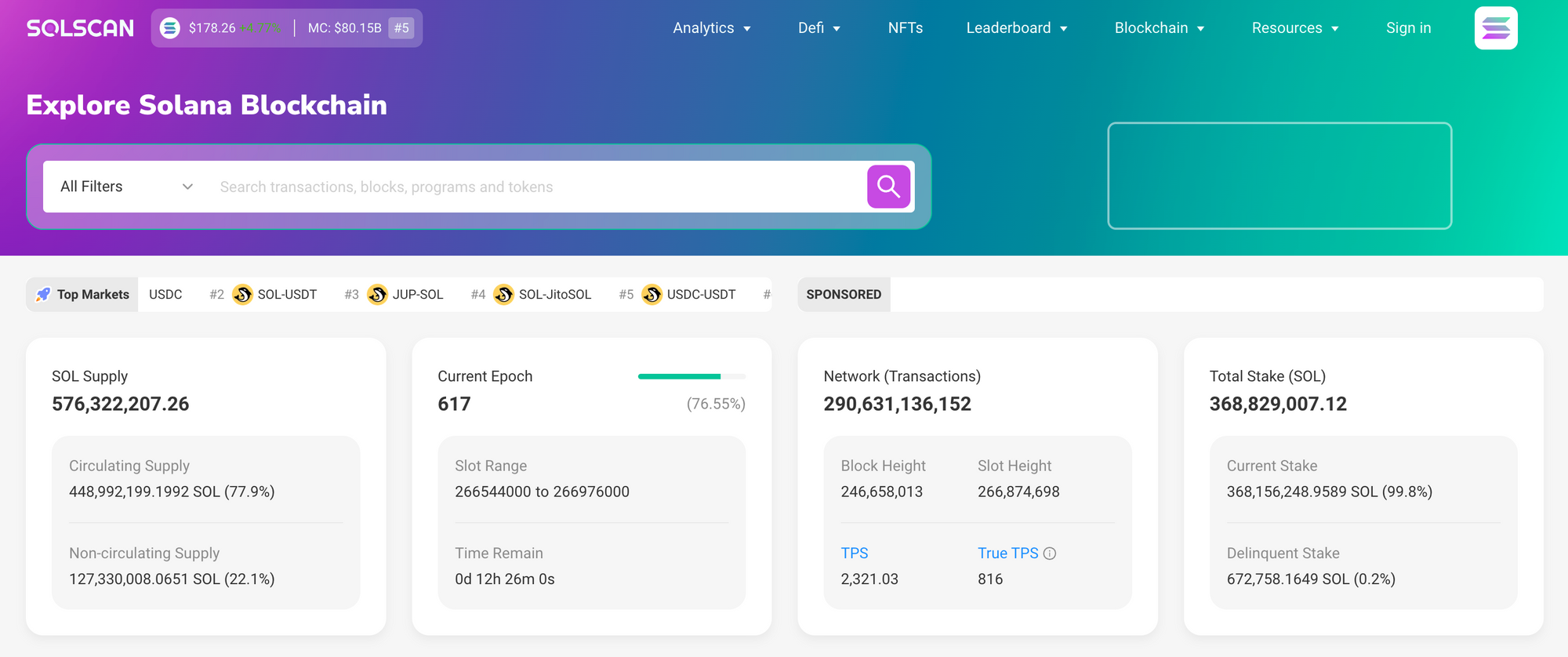
Here’s a practical tip—bookmark the official pages you trust. For me the go-to tool when I need a clean NFT tracker and a robust transaction parser is solscan. It surfaces mint accounts and often links to on-chain metadata, which makes tracing provenance far easier than hopping between raw RPC dumps. Oh, and by the way… use that search bar strategically: search program IDs, not just wallet addresses, when you suspect backend changes.
Initially I thought speed alone mattered, but then I realized depth matters more for NFT work. A fast explorer that hides instructions or flattens token activity will cost you time in the long run. On the flip side, a deep explorer with slow UI can be tolerable if it caches well and offers exportable CSVs. Balance is everything.
Something else—developer tools and filters are underrated. Filters let you isolate mint events, token burns, or delegated approvals. I use them constantly, and if an explorer lacks them I feel constrained. Also, the ability to watch addresses and receive simple webhook alerts saved me more than once when a collection suddenly airdropped holders.
Common pitfalls and how to avoid them
Whoa!
Trusting a single source without cross-checking is a rookie mistake. Seriously? Yes. There are cases where explorers index differently, and timestamps can be misleading due to confirmations and forks. If a transaction appears missing, check the program logs and RPC endpoint health. Sometimes RPC nodes are slow, and what looks like a failed transaction is just latency.
Also watch out for wallet address reuse across multiple programs. That one wallet can hold several token accounts for different mints, and a cursory glance will undercount holdings. My trick is to expand the token account list and sort by amount or by mint to get the full picture. It’s tedious sometimes, but worth it. I’ll be honest—I still miss a token now and then, but I catch it faster than before.
One more thing—metadata mutability. Collections sometimes move off-chain assets or change URIs. If you rely on a single explorer to display images, you may see stale content. Cross-verify with the mint transaction and the metadata account directly. If the metadata link resolves to a CDN, check headers for caching rules. Small detail, but very very important when you’re evaluating rarity or provenance.
Practical steps to set up an NFT tracker workflow
Whoa!
Start small. Pick a dozen addresses or mints to follow. Use an explorer that supports watchlists or subgraph-like queries. Next, export transaction histories weekly and compare them. That differential analysis shows new mints, transfers, and unexpected approvals. I do this partly automated, partly manual—because automation misses edge cases.
Keep a simple spreadsheet with mint timestamps, program IDs, and token mint addresses. Add notes. Your future self will thank you. I have a column called “weirdness” where I jot down odd findings—sometimes it’s as trivial as “image URL 404s” and sometimes it’s “royalty override spotted”. Those notes help when you need to justify a purchase or explain a provenance chain to someone else.
Finally, keep learning the on-chain layout. Program accounts, metadata accounts, token accounts—know how they relate. It makes you faster and more confident. I still hit a wall with some complex programs, and I’m not 100% sure about all rare edgecases, but the more you dig, the more patterns reveal themselves.
FAQ — Quick answers for busy people
Q: Which explorer should I use for NFTs?
A: Use an explorer that shows mint accounts, parsed instructions, and metadata links. I personally lean toward tools that combine these views into a single page so you don’t toggle between raw logs and token lists. Also, keep a backup explorer for quick cross-checks.
Q: How do I verify a mint is legit?
A: Look at the mint transaction, check the program ID, confirm the creator and update authority in the metadata account, and inspect whether metadata URIs resolve correctly. If any of those pieces look off, pause and dig deeper. Trust your instincts—if somethin’ smells weird, it probably is.
Q: Can explorers show historical metadata changes?
A: Some do, by exposing update instructions and program logs. If not, inspect transaction history for the metadata account; updates are usually explicit and logged. It’s a bit manual, but it gives you a timeline of edits which is crucial for collectors and researchers.